
The following is a brief summary of “Through Strategic Litigation to Legalisation? The Long, Successful Fight to Decriminalise Same-Sex Relations in Botswana“, an event organised by the GIZ Rainbow Network and Hirschfeld-Eddy-Foundation on 18 July 2019 in Berlin, Germany. Below is is a slightly edited version of the text first first published on the LSVD blog.
The GIZ Rainbow Network and Hirschfeld-Eddy-Foundation invited to a talk and discussion with Caine Youngman, a human rights activist from Botswana and legal advocacy manager for “Lesbians, Gays, Bisexuals of Botswana” (LEGABIBO). Caine was interviewed by Sarah Kohrt, project lead LGBTI platform human rights at Hirschfeld-Eddy-Foundation.
In June 2019, the High Court of Botswana declared unconstitutional a colonial law criminalising consensual same-sex sexual relations. The ruling came after years of legal action, advocacy and community-building by LEGABIBO, Botswana’s largest LGBTI organisation, and its allies.
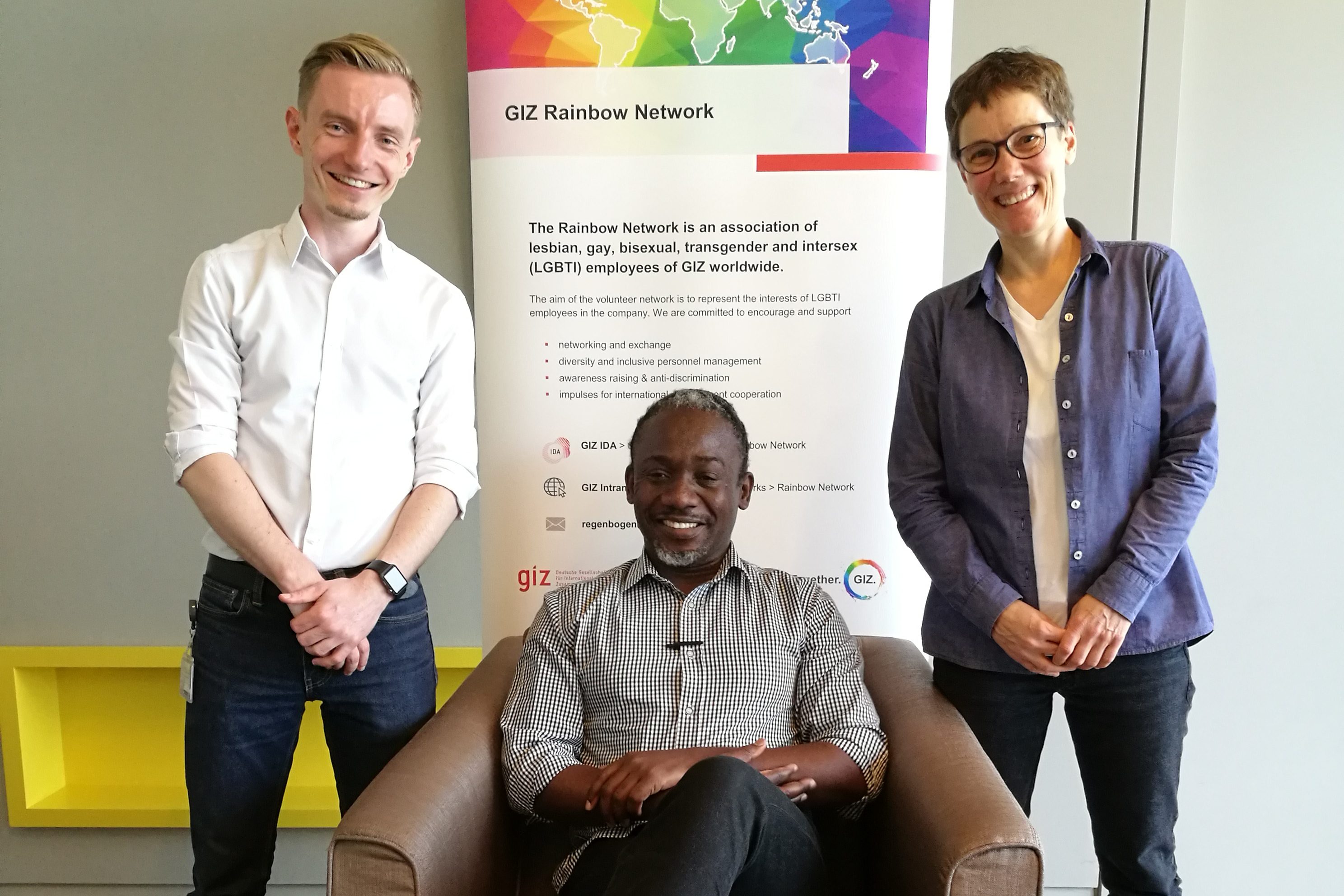
Here’s some key messages I took away from Caine’s talk:
It takes a village (and more…)
LEGABIBO’s victory came years of working with religious, tribal, community, political and social leaders. That’s the idea behind “strategic litigation” – use the courts to protect your legal rights but also build popular support for your cause (or at least weaken the opposition).
One thing that worked well in Botswana: engaging the parents and families of LGBTI people. This PFLAG group had the experience and seniority to reach people that refused to LGBTI activists or even their own gay and lesbian relatives.
LEGABIBO also successfully worked with trade unions to have sexual orientation and gender identity included in Botswana’s first law against discrimination in the workplace. The two groups strengthened each other’s case in the negotiations with the government.
It takes time
The first decrim case in Botswana was brought over 15 years ago, and the fight is still not fully won: The government appealed last month’s ruling. (LEGABIBO is very optimistic to win before the highest court later this year.)
In the meantime, LEGABIBO fought for over a decade to be recognised as an NGO by the government. They achieved this in 2017 (through another historic ruling). It paved the way for engaging officially with the government and other organisations in Botswana.
It takes the right kind of donor
One of the main lines used against LGBTI people is that homosexuality is a “foreign concept.” It was important to LEGABIBO to be seen as leading the fight for decriminalisation and equality in their own country – as sons and daughters, brothers and sisters, and citizens.
Early in the decrim case, LEGABIBO declined support from a major international NGO because the latter wanted to run a “name-and-shame” campaign. The local LGBTI community felt that this would have backfired, and rejected the offer.
LEGABIBO was supported by international donors to run community-building and other activities. Their legal battle, however, received technical and financial support from other African civil society organisations (and no foreign state actors).
It takes facts
Caine stressed LEGABIBO’s ability to bring facts to the court. Over the years, they conducted research to make an evidence-based case that the criminalisation of same-sex conduct harmed the dignity, health and freedom of expression of Botswana’s LGBTI citizens. They conducted the research in partnership with the same organisations used by the Botswana government – and made it impossible for the government to dismiss it.
The text does not necessarily reflect the views of GIZ, the GIZ Rainbow Network, Hirschfeld-Eddy-Foundation, LSVD, Caine Youngman or LEGABIBO.
 Felix Youngman